
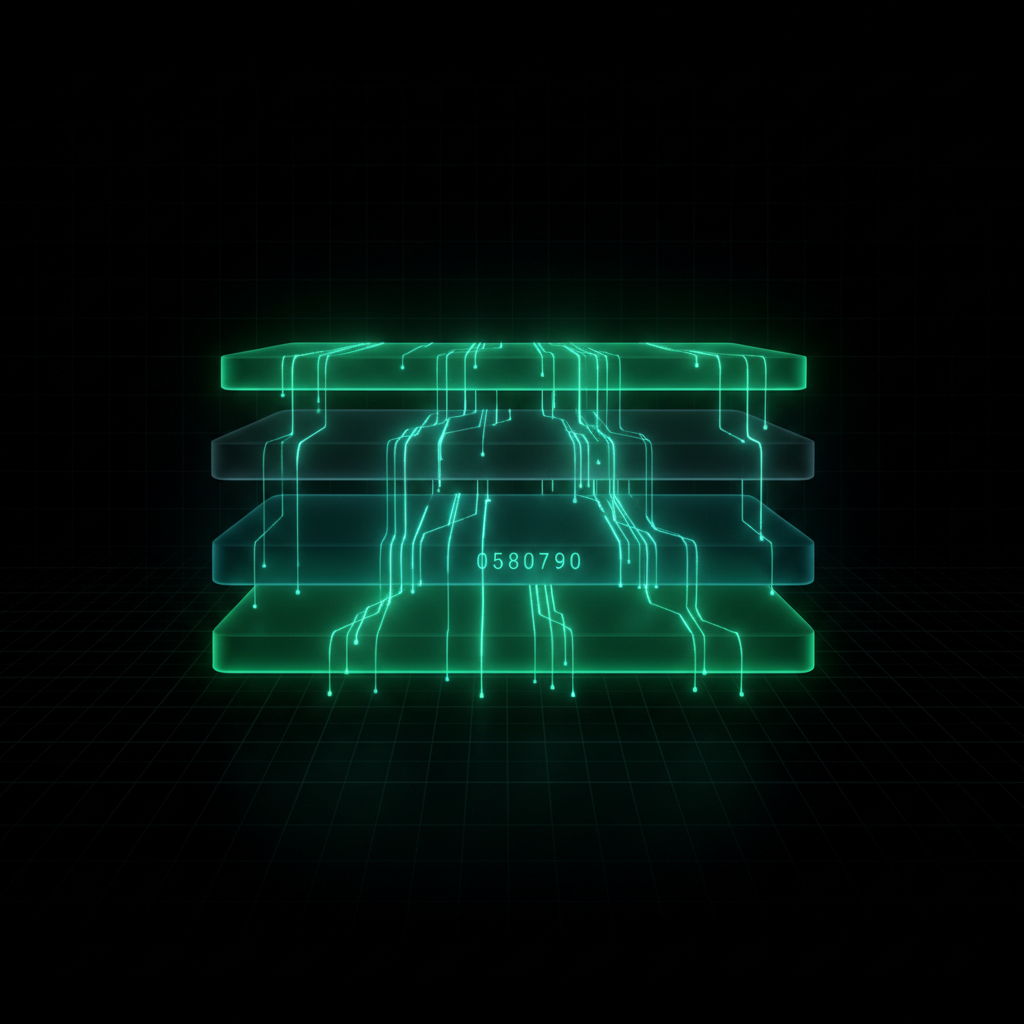
Architecture vs Accumulation
Most businesses don't have a marketing stack - they have a marketing accumulation. Over time, they've added tools one by one: an email platform here, a CRM there, a landing page builder, an analytics tool, a scheduling app. Each was added to solve a specific problem. None were designed to work together.
The result is a collection of disconnected tools that don't share data, don't trigger each other, and don't provide a unified view of the customer. This is not infrastructure. This is accumulation.
Infrastructure is different. It's architected - every tool is chosen for its role in the system, every integration is designed, and every data flow is mapped. The tools serve the architecture, not the other way around.
The Layers of a Growth Infrastructure Stack
A proper growth infrastructure has five layers:
Layer 1: Acquisition
The tools that generate traffic and leads - Google Ads, Meta Ads, Google Analytics 4, Google Tag Manager.
Layer 2: Conversion
The tools that turn traffic into leads or customers - Perspective funnels, Shopify, Calendly.
Layer 3: CRM & Data
The tools that store, manage, and structure customer data - GoHighLevel, Klaviyo, Postscript.
Layer 4: Automation
The tools that automate communication and follow-up - GoHighLevel workflows, Klaviyo flows, Make/Zapier.
Layer 5: Analytics & Reporting
The tools that measure performance - Google Analytics 4, platform dashboards, Looker Studio.
Why Each Layer Matters
Each layer serves a specific function, and skipping a layer breaks the system:
- Without acquisition, you have no traffic
- Without conversion, your traffic is wasted
- Without CRM, your leads are unmanaged
- Without automation, your follow-up is manual
- Without analytics, your decisions are blind
Most businesses have layers 1 and 2 but are missing or underinvesting in layers 3, 4, and 5. This is why they have traffic but no system.
The Integration Architecture
Tools don't become infrastructure just by being stacked. They become infrastructure through integration:
- Acquisition to Conversion: Ad platforms send data to funnels via URL parameters
- Conversion to CRM: Funnels send lead data to CRM via API or webhook
- CRM to Automation: CRM triggers fire automation sequences
- Automation to Analytics: All platforms send data to analytics layer
- Analytics to Acquisition: Performance data informs acquisition decisions
This data flow is what makes the stack a system. Without it, you have tools. With it, you have infrastructure.
Building Your Stack
If you're building a growth infrastructure from scratch or replacing an accumulation of disconnected tools, the process is:
- Define your architecture - what layers do you need, what role does each play
- Choose tools by role - not by popularity, but by fit within the architecture
- Design integrations - map every data flow before building
- Build in order - acquisition, conversion, CRM, automation, analytics
- Test end-to-end - verify data flows through the entire system
- Document everything - so the system can be maintained and scaled
This is the process we follow with every client. If you're ready to move from accumulation to architecture, book a strategy call.